Oesophageal Cancer Awareness Month 2026

Noelle Ryan with granddaughter, Evie.

While the outlook for oesophageal cancer has been transformed over the past 25 years in Ireland, we still have a lot of work to do.

Twenty-five years after its founding, the Oesophageal Cancer Fund (OCF) is being credited with helping to transform the outlook for oesophageal cancer in Ireland, and the charity continues to play its part today as a proud member of AllCaN Oesophageal. Founded in 2001 by Noelle Ryan and a group of friends following the death of a childhood friend, Lucilla Hyland, from oesophageal cancer, OCF was established at a time when awareness of the disease was low, diagnoses were often made at an advanced stage, and treatment options were limited and frequently palliative.

Today, Ireland is recognised internationally for excellence in the clinical management of oesophageal cancer, and in associated scientific research.  Survival rates have improved significantly over the past 25 years, with cure rates approximately doubled, driven by advances in multidisciplinary care, research and technology within a nationally regulated centralised programme. Improved awareness has also contributed to more patients being diagnosed at an earlier stage, when outcomes are better. However, new Amárach research* commissioned by OCF highlights why the charity still has a lot to do in driving awareness of this cancer and its symptoms.  While more than three quarters of adults experience heartburn and most feel confident treating it themselves, nearly 70% of those surveyed say they would not be confident recognising the early warning signs of oesophageal cancer. Reflecting on this milestone, OCF founder Noelle Ryan says the progress achieved over the past 25 years has been extraordinary, but public awareness must continue to improve:

“When we started OCF, oesophageal cancer was rarely talked about and many people were diagnosed too late. There is far more hope today, but this research shows we still need to help people understand the symptoms and that difficulty swallowing food or persistent heartburn should be checked out by a GP.”

(*Amárach Research undertaken on the week of 5th January 2026 amongst a representative sample of 1000 adults across Ireland)

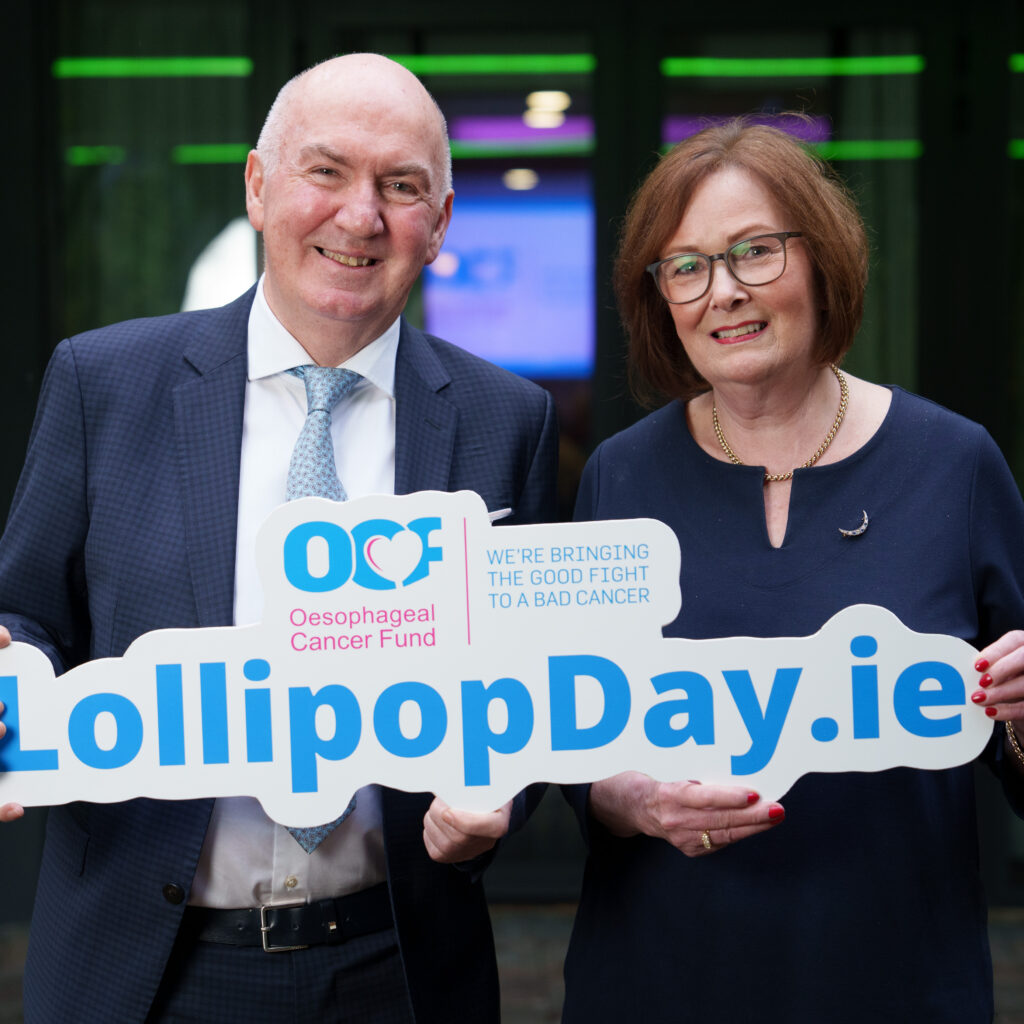
Lollipop Volunteer Claire O'Reilly and Patient Representative Feargal Delaney give their insight into Oesophageal Cancer.

Raising awareness, early detection and survival rates

Professor John Reynolds, National Lead for Oesophageal Cancer and a Board Member of OCF, says: “The Oesophageal Cancer Fund has played a significant role in helping Ireland achieve survival rates comparable with the best international benchmarks, and in supporting patients in survivorship. From the very beginning, OCF focused on raising awareness of ‘red flag’ symptoms such as swallowing difficulties, while also supporting vital research and patient education. More recently, the emphasis has expanded to prevention and the importance of not ignoring severe or chronic reflux, which can be linked to Barrett’s oesophagus, the main risk factor for oesophageal cancer.”

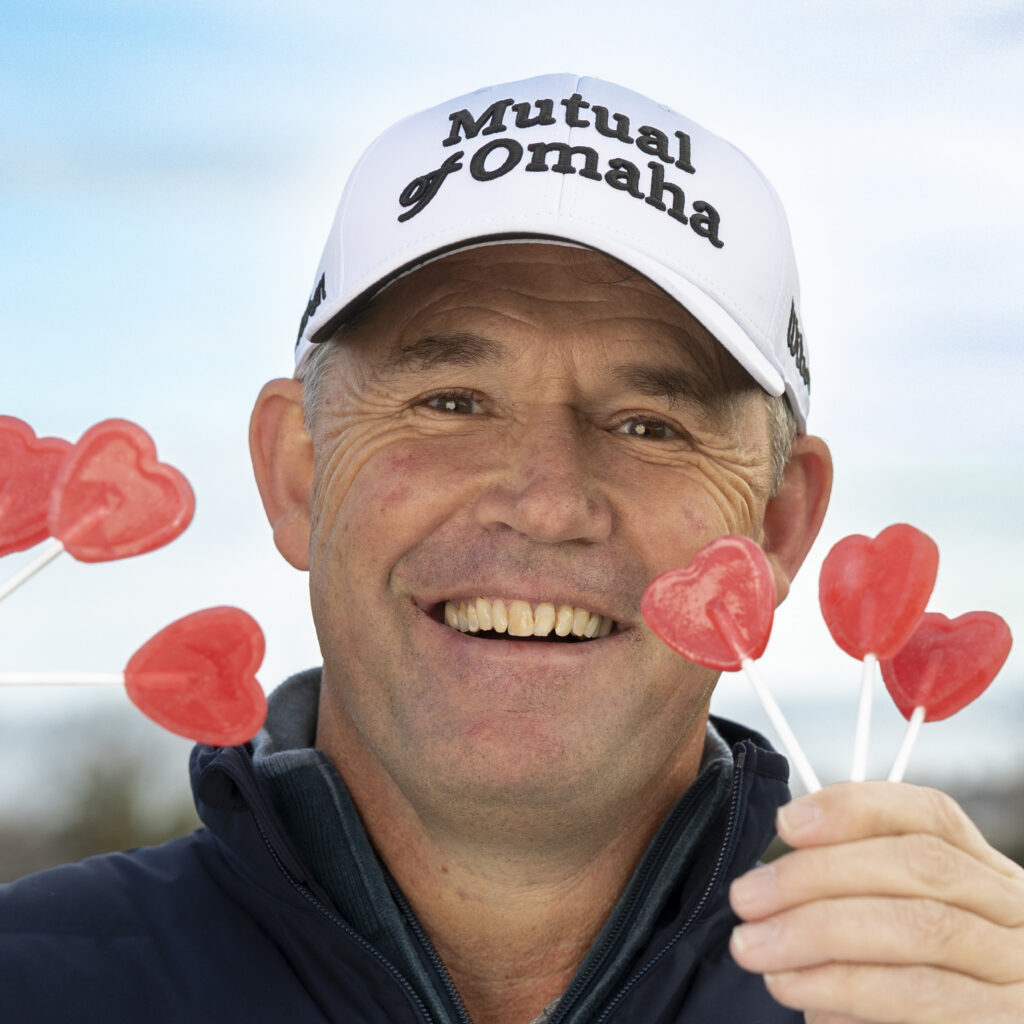
OCF patron and professional golfer Padraig Harrington, echoes this sentiment saying, “My dad passed away from oesophageal cancer over 20 years ago. He was very fit and strong, so it came as a huge shock. On average, people wait around three months before seeking medical advice, and that delay can make a real difference. If you’re experiencing symptoms like difficulty swallowing food, persistent heartburn or hiccups, I would urge you to get them checked. At the very least, it can give you peace of mind. The Oesophageal Cancer Fund does fantastic work in raising awareness, as knowing the symptoms and acting early really can save lives.”

OCF Patron and Professional Golfer Padraig Harrington

Prevention has become a cornerstone of care, particularly through Ireland’s Barrett’s Oesophagus Registry and Biobank, funded by OCF and Precision Oncology Ireland.  The registry now includes almost 10,000 patients, enabling clinicians to monitor progression, intervene early and, in many cases, prevent cancer from developing altogether. To date, around 800 patients with pre-cancer or very early-stage cancer have been treated through this programme, with a 100% cure rate.  This result highlights how targeted investment in such research and development can have such a positive impact for patients. 

Patient ambassador Gillian Schorman, a nurse who was diagnosed four years ago with oesophageal cancer, said her experience highlights just how far care has come. “When I trained as a nurse over 40 years ago, oesophageal cancer was like a death sentence. Patients would fade away because they couldn’t eat and the surgical options and nutritional support were very limited back then.  So, when I was diagnosed, I was terrified, but the care and support I received was so positive, with major advancements in the surgical and nutritional options available nowadays. I had real options, support and hope, and I’m proud to be part of the OCF community helping others navigate their diagnosis.”

Prof John Reynolds & OAC Patient Ambassador Gillian Schorman
OCF CEO Carmel Doyle, with husband Gerry and daughter Rose

Stronger together and how to get involved

Looking ahead, Carmel Doyle, CEO of OCF, whose husband is a survivor of oesophageal cancer, says:  “The next 25 years must focus on prevention, early diagnosis and education, particularly among men, who account for the majority of cases and are more likely to delay seeking medical help. That’s why we are calling for greater engagement with GPs and pharmacists, who are often the first point of contact for people repeatedly self-treating heartburn and acid reflux.  We are also calling on more businesses, clubs and associations to get involved through their employee wellbeing and men’s health programmes, because increasing awareness about this cancer will save lives.  Likewise, we continue to engage collaboratively as part of the overall care and research community – while always keeping the patient at the centre – through our membership of NCCP, AllCaN, Precision Oncology Ireland and the HRCI (Health Research Charities Ireland).

Throughout the month of February, which is oesophageal awareness month, we particularly need your help.  Please like, share, and register for Lollipop Day taking place on 27th and 28th February, with communities, schools, businesses and our care and research partners across Ireland raising money to support vital research, patient support and education.  For more information on Lollipop Day, to volunteer, or to make a donation, please go to www.lollipopday.ie or www.ocf.ie.

Meanwhile, please help OCF to share the symptoms of oesophageal cancer and to encourage more people to mind their gut health this month and every month.

Symptoms:

- Difficulty swallowing (dysphagia) or pain when swallowing

- Food feeling stuck in the throat or chest

- Persistent heartburn or acid reflux

- Persistent chest pain or discomfort

- Unexplained weight loss

- Persistent coughing or hiccups

- Vomiting or nausea

- Ongoing fatigue

Medical experts advise that reflux or heartburn symptoms that persist for more than three weeks, worsen over time, or do not respond to treatment should always be discussed with a GP.  Anybody experiencing difficulty swallowing food should seek medical advice urgently.

"The Lollipop Dance"

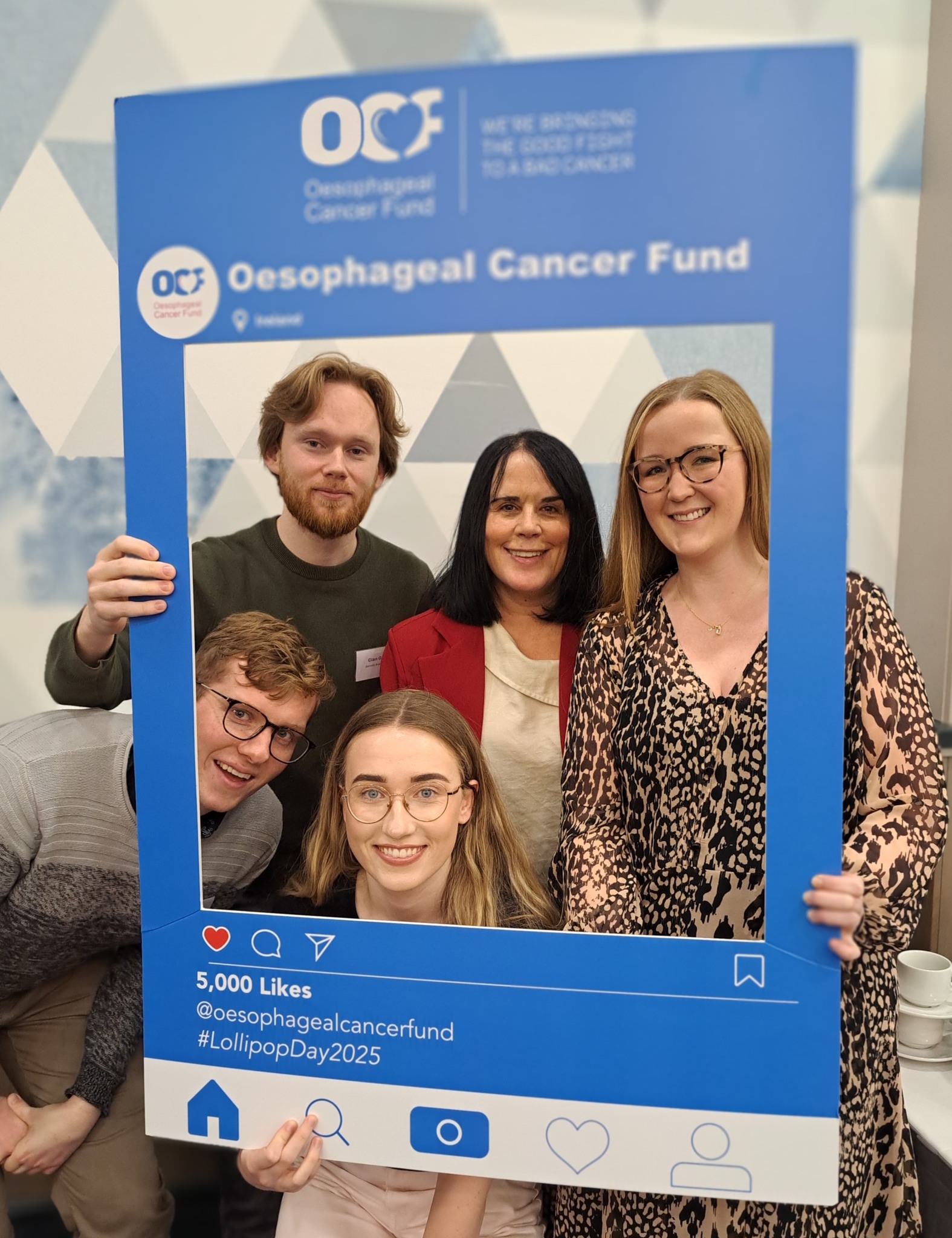
Prof Jacintha O'Sullivan with researchers Cian Gargan, Sam Cahill & Lorraine Smith, along with Aoibhinn O'Reilly, Advanced Nurse Practitioner Upper GI.

How a little lollie goes a long way

OCF is best known for its annual Lollipop Day campaign, which has raised over €2.5 million to fund cancer research and patient support through the sale of 1.2 million lollipops. Most significantly, OCF fundraising spearheaded the establishment of the National Barrett’s Oesophagus Registry and Biobank, a vital step in identifying and monitoring people at risk of developing Oesophageal Cancer.  Barrett’s Oesophagus is an inflammatory condition that damages the oesophagus.  While it is estimated that less than 5% of Barrett’s patients go on to develop Oesophageal Cancer, the majority of diseased oesophaguses show traces of Barrett’s, demonstrating a real link.  The combined Barrett’s registries North and South of Ireland make them very powerful in research terms, with a total of 35,000 patients monitored and records analysed, with the aim of driving early detection of Barrett’s and prevention of Oesophageal Cancer.  OCF is committed to funding the Barrett’s Registry and Biobank to the tune of €456,000 up to 2030, as part of an expanded collaboration now funded through Precision Oncology Ireland.

Diana Cooke and Lorraine Smith
Cian Gargan and Maggie Menon

OCF Patient Support Group Meeting (2026)

AllCaN

If you would like to contact the OCF, get in contact with them here